Дом и жизньHome and Life
Фото и видео с историейPhotos and Videos with a Story

Фото, которые рассказывают историю
Когда снимок перестаёт быть просто файлом и становится живой нитью времени.
Больше чем пиксели
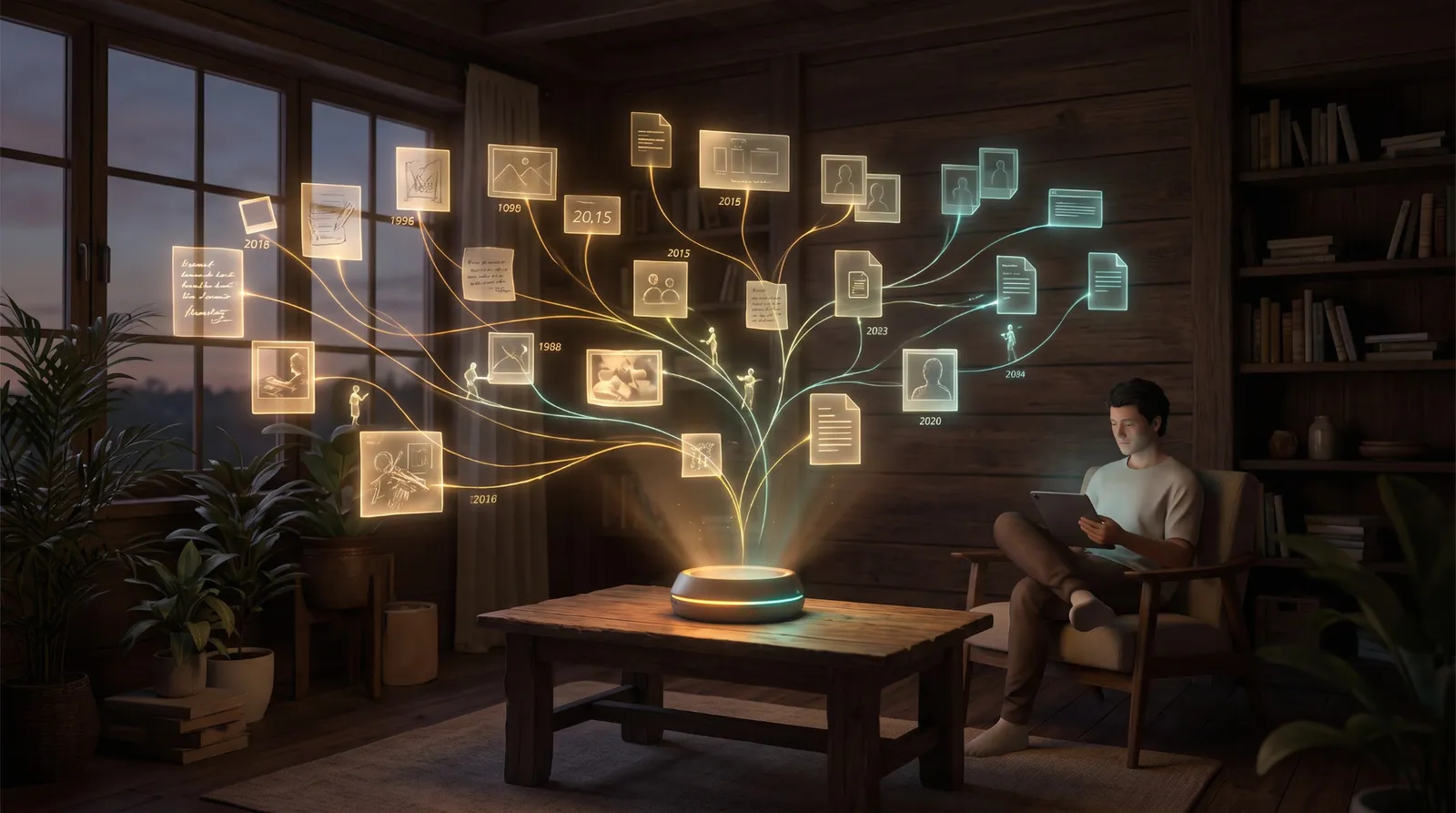
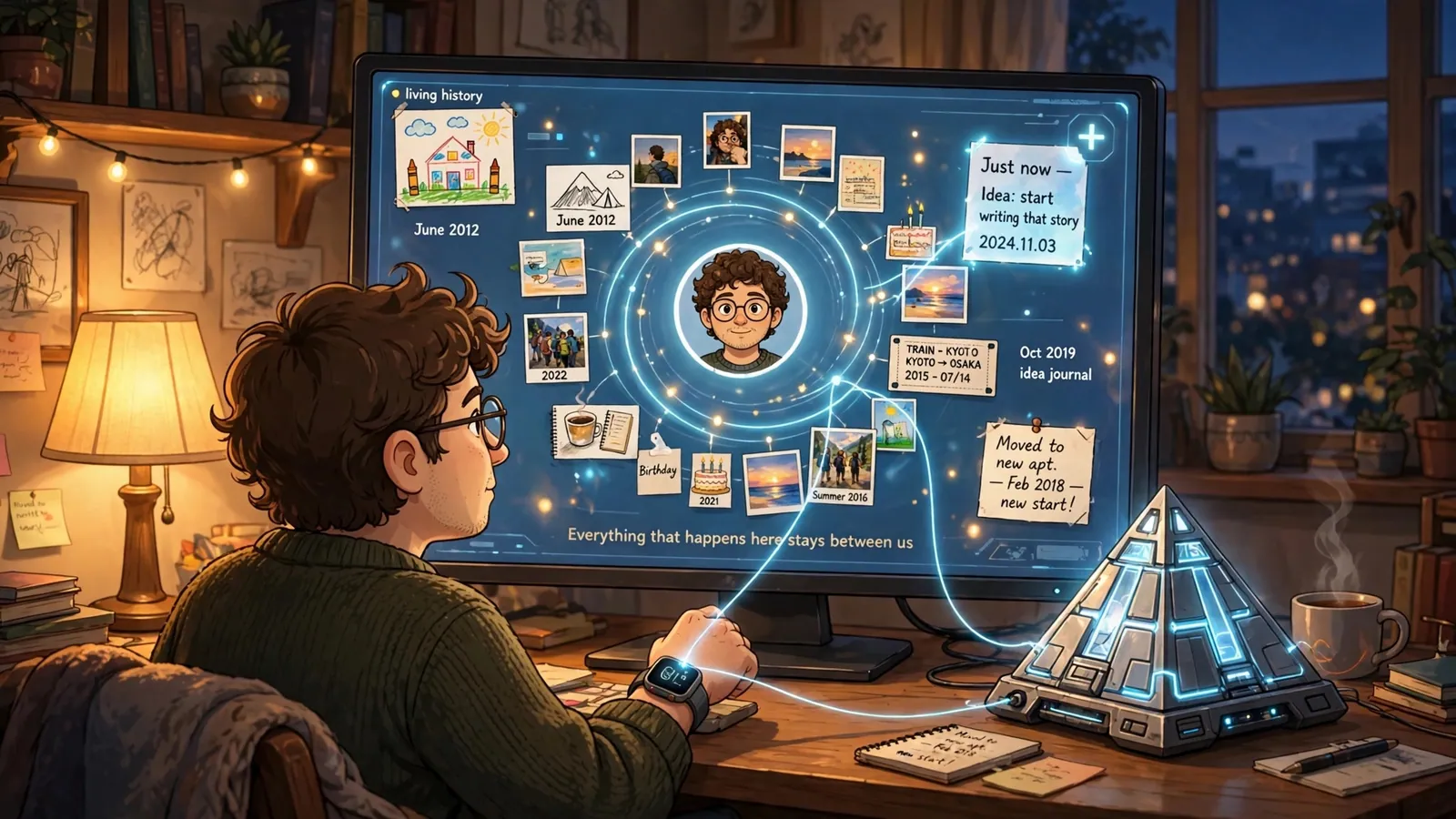
В Усадьбе фотография не лежит одиноким файлом. Когда кадр попадает на ИИ-станцию, она узнаёт на нём людей, замечает знакомые предметы, определяет место и время съёмки, читает надписи на вывесках и документах. Снимок сразу вплетается в жизнь пользователя: связывается с календарём — что происходило в тот день, с дневником — что он тогда записал, и с другими снимками. Каждое фото становится частью общей Хроники.
Диалог сквозь годы
Проходят годы, и простой вопрос превращается в путешествие в прошлое:
— Что это за фотография?
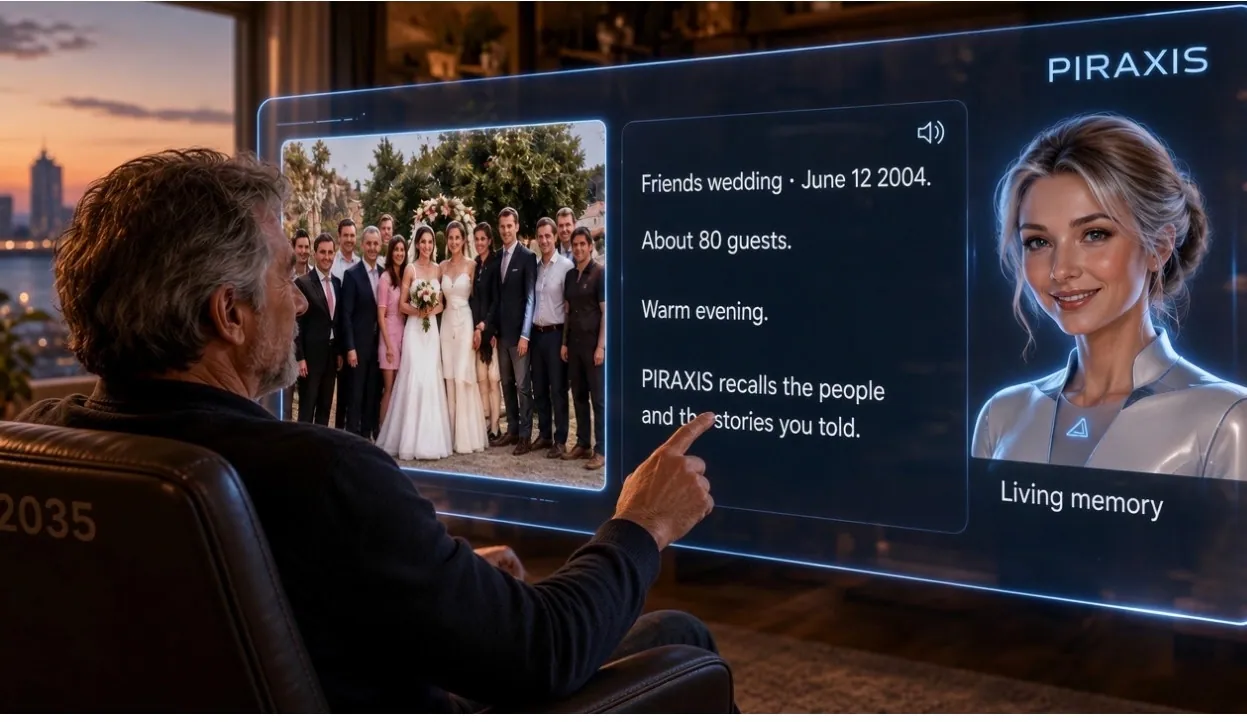
— Это свадьба твоего друга Игоря. Ты сидишь слева, рядом Саша. Ты рассказывал, что после церемонии был ужин у моря и все танцевали до ночи. Показать ещё кадры с этого дня?
— Давай.
— Я нашёл девять снимков. А ещё вот ваше знакомство с Игорем, вот общая рыбалка, а вот встреча друзей. Собрать всё в один альбом?
Честность памяти
Ассистент не выдаёт догадки за факты и всегда показывает, откуда взялись сведения:
- Факт: совпадают даты, лица и записи в Хронике.
- Предположение: совпадает время или место, но прямой записи нет.
- Догадка: «Возможно, это…».
А если данных нет, он так и говорит: «Я вижу на фото пляж, но в твоей Хронике нет записей об этой поездке».
Поиск по смыслу и живые альбомы
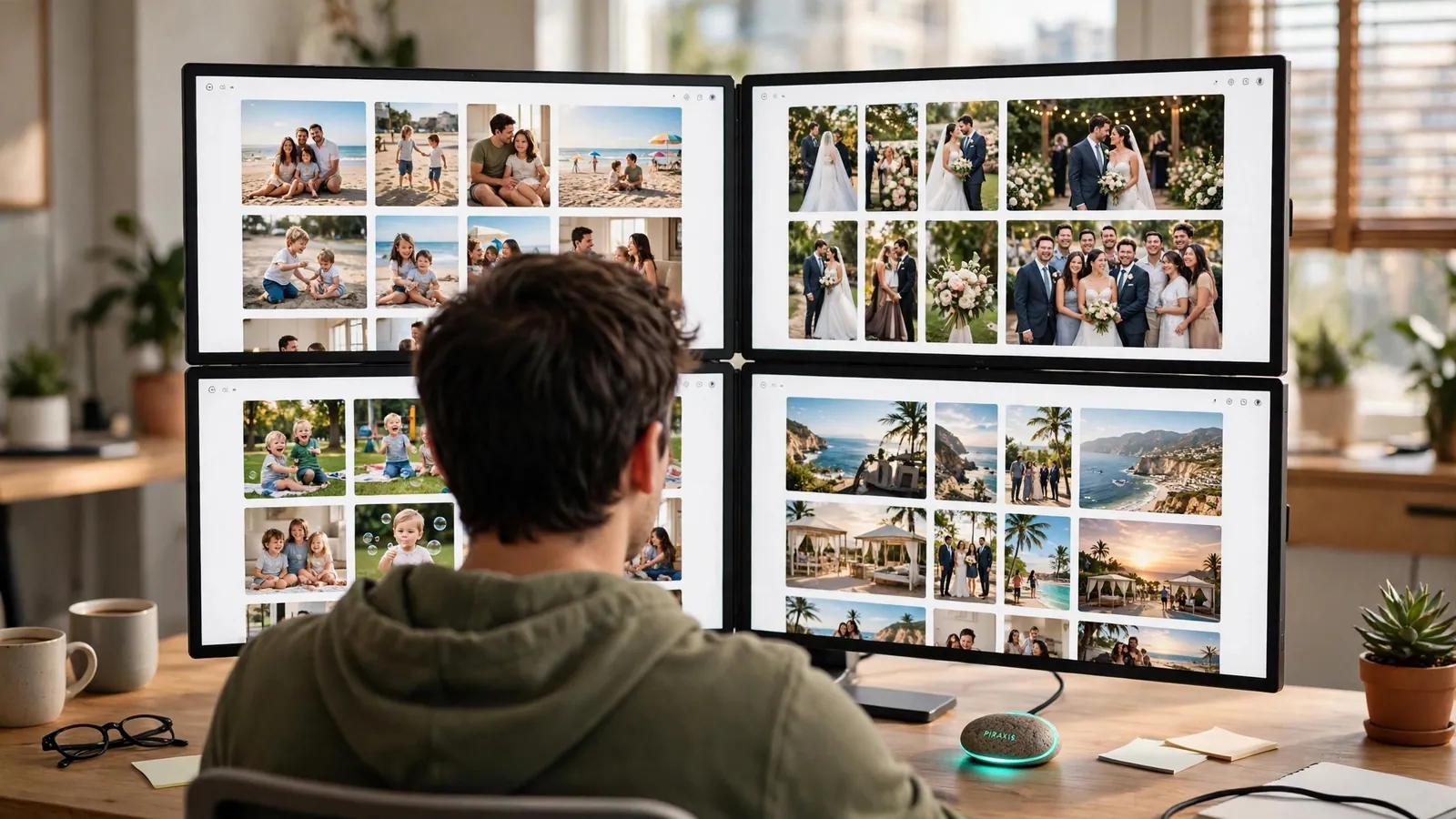
Не нужно перебирать тысячи папок. Достаточно попросить: «Найди все фотографии, где мы строим дом», — и станция найдёт их, даже если в названиях файлов нет таких слов. А ещё ассистент сам замечает серии событий и собирает их в альбомы — «Наш отпуск», «Ремонт», «Семейные праздники», сохраняя порядок и настроение каждого момента.
Где хранить целую жизнь
Со временем фото и видео накапливается очень много — целая жизнь семьи. Поэтому их можно хранить в отдельном зашифрованном облаке, которое видит только пользователь, или в дополнительном блоке памяти рядом со станцией. Выбор за вами, а связи, истории и альбомы остаются дома.
Архитектура хранения строится по принципу «Горячий кэш — Холодный архив». Сами тяжелые файлы (RAW-фото, видео в 4K) могут лежать на внешнем NAS или в зашифрованном облаке. Но их «отпечатки смысла» (векторные индексы для поиска и граф связей) всегда остаются на быстром SSD внутри станции. Благодаря этому поиск по фразе «найди фото, где мы строим дом» работает за миллисекунды, а станции не нужно держать в памяти гигабайты тяжелых файлов. Как только вы находите нужное фото, станция мгновенно подтягивает оригинал из холодного архива по защищенному каналу.
Для тех, кто разбирается: Снимки, записи, календарь и данные о месте связываются в единый граф знаний внутри домашнего контура. Распознавание изображений, сопоставление метаданных и смысловая индексация выполняются на станции, поэтому связи между фото и событиями строятся без отправки личных данных наружу.
Фотография в Усадьбе — не архив прошлого. Это мост, который всегда открыт.
Photos That Tell a Story
When an image stops being just a file and becomes a living thread of time.
More Than Pixels
In the Estate, a photograph is never a lonely file. When an image reaches the AI station, it recognizes the people in it, notices familiar objects, determines the place and time of the shot, and reads text on signs and documents. The photo is woven straight into the user's life: linked to the calendar — what was happening that day, to the diary — what the user wrote back then, and to other photos. Every image becomes part of the shared Chronicle.
A Dialogue Across the Years
Years pass, and a simple question becomes a journey into the past:
"What is this photo?"
"This is your friend Igor's wedding. You're sitting on the left, next to Sasha. You told me that after the ceremony there was a dinner by the sea and everyone danced until late. Want to see more shots from that day?"
"Sure."
"I found nine photos. And here's when you first met Igor, here's your fishing trip together, and here's a gathering of friends. Shall I put them all into one album?"
The Honesty of Memory
The assistant doesn't pass off guesses as facts, and always shows where the information came from:
- Fact: dates, faces, and records in the Chronicle all match.
- Assumption: the time or place matches, but there's no direct record.
- Guess: "It might be…"
And if there's no data, it says so: "I see a beach in the photo, but there are no records of this trip in your Chronicle."
Search by Meaning and Living Albums
No need to dig through thousands of folders. Just ask: "Find all the photos where we're building the house" — and the station finds them, even if those words appear in no file name. The assistant also notices series of events on its own and gathers them into albums — "Our Vacation," "Renovation," "Family Holidays" — keeping the order and mood of every moment.
Where to Keep a Whole Life
Over time, photos and videos pile up into a whole family's life. So they can be kept in a separate encrypted cloud that only the user can see, or in an extra memory unit next to the station. The choice is yours, and the links, stories and albums stay at home.
The storage architecture follows the "Hot Cache — Cold Archive" principle. The heavy files themselves (RAW photos, 4K videos) can be stored on an external NAS or in an encrypted cloud. But their "meaning fingerprints" (vector indexes for search and the knowledge graph) always remain on the fast SSD inside the station. Because of this, searching for "find the photo where we are building a house" works in milliseconds, and the station doesn't need to keep gigabytes of heavy files in memory. As soon as you find the photo you need, the station instantly pulls the original from the cold archive via a secure channel.
For those who know the architecture: Photos, notes, the calendar, and location data are linked into a single knowledge graph within the home perimeter. Image recognition, metadata matching, and semantic indexing run on the station, so the links between photos and events are built without sending personal data outside.
Photography in the Estate is not an archive of the past. It is a bridge that is always open.